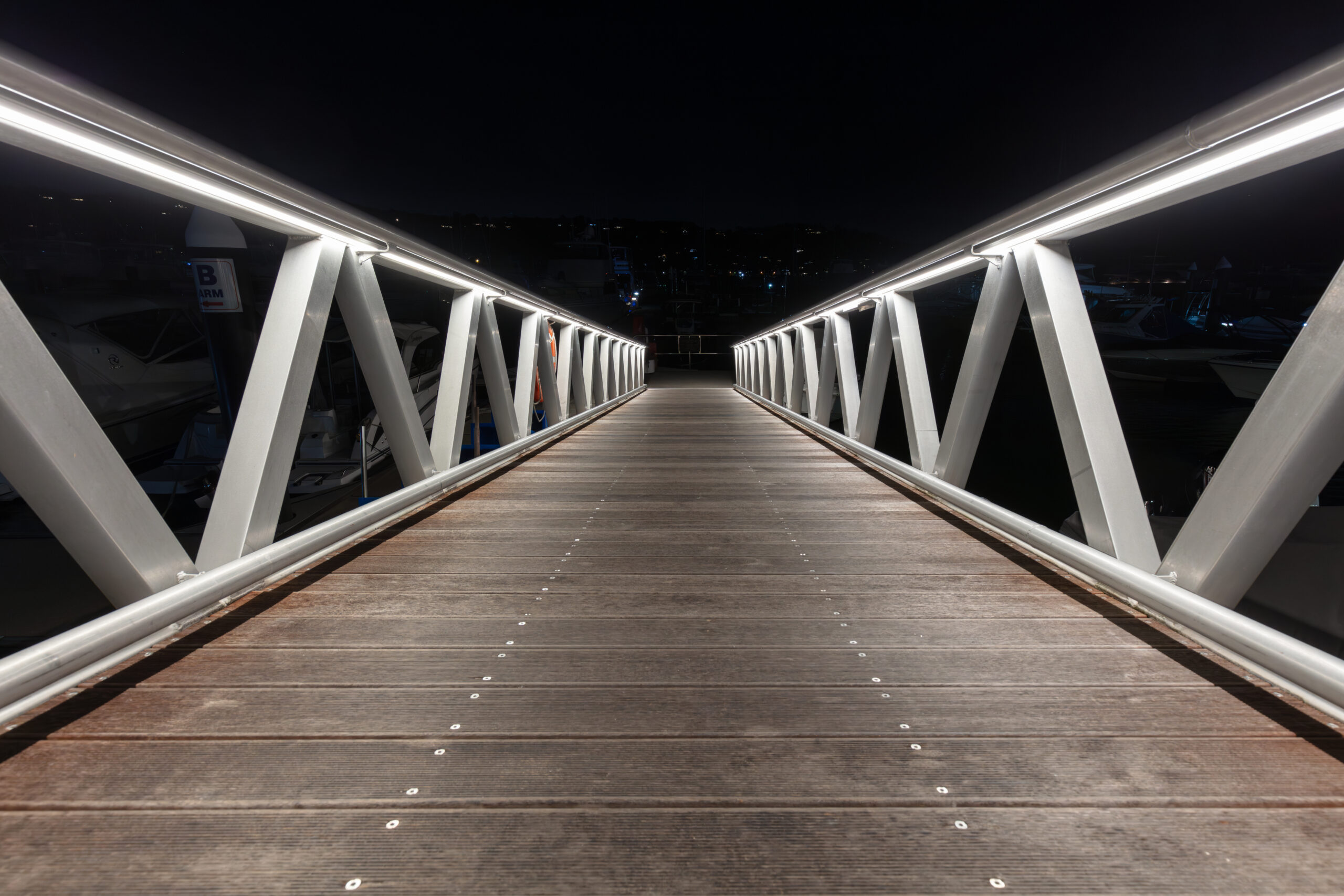
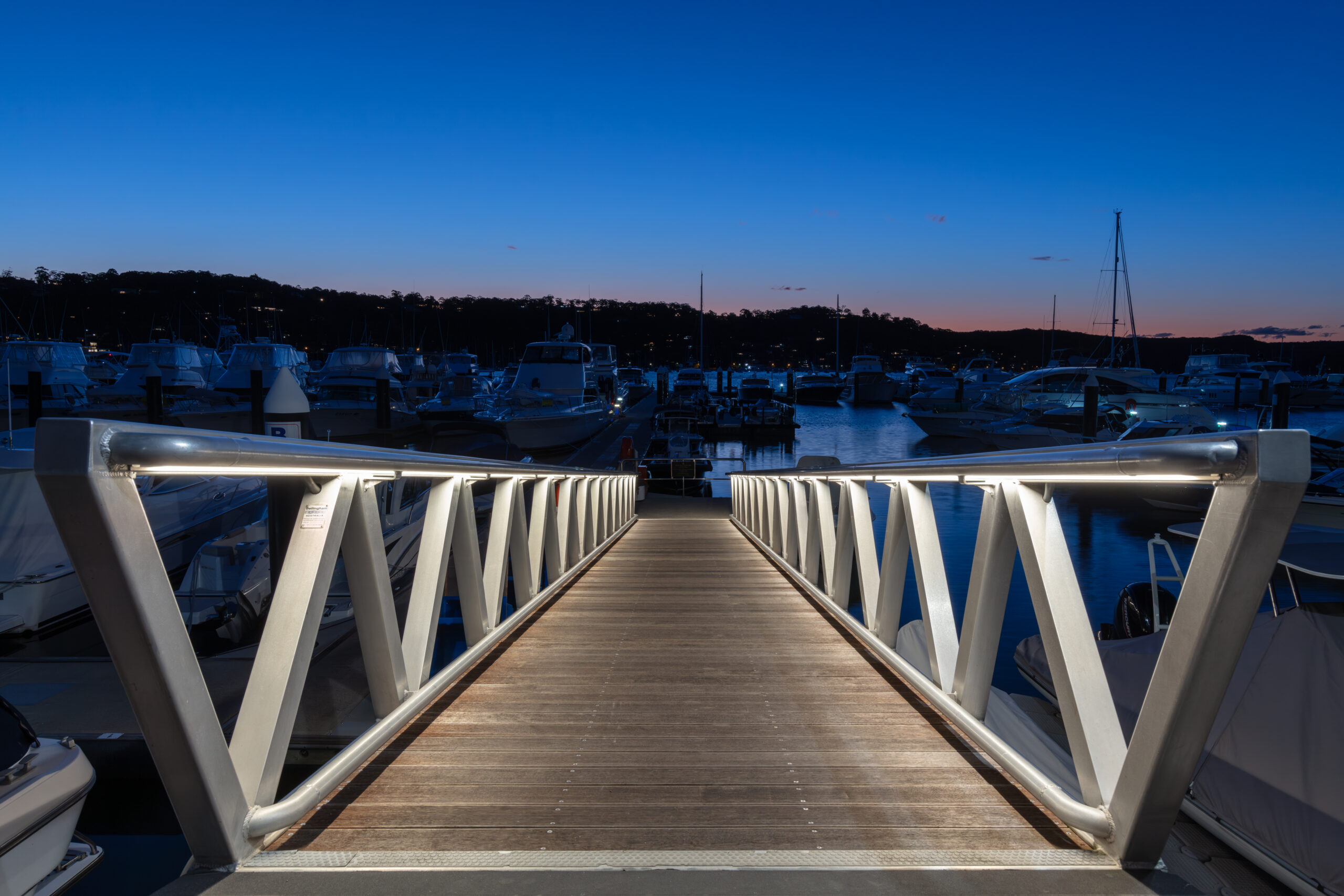
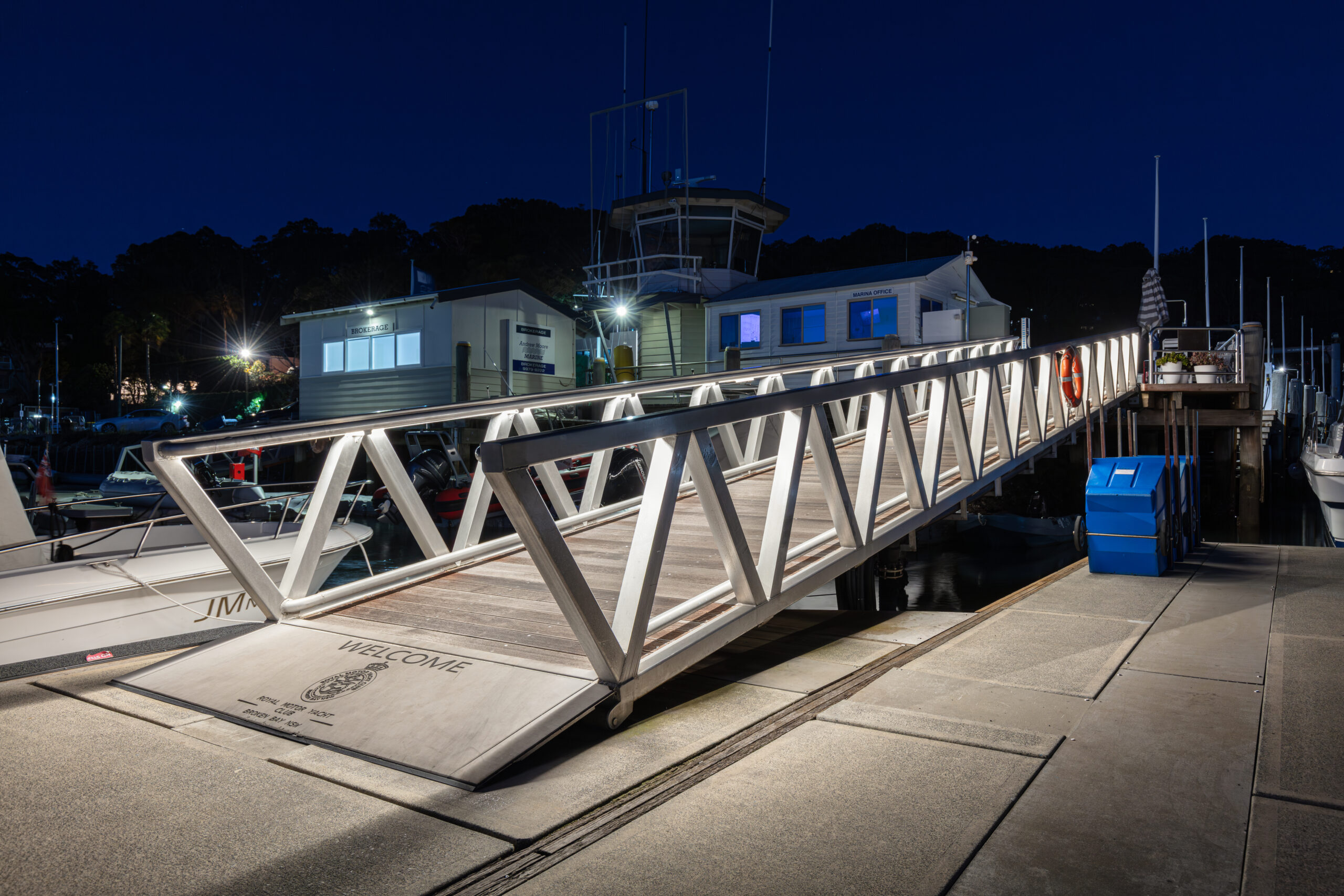
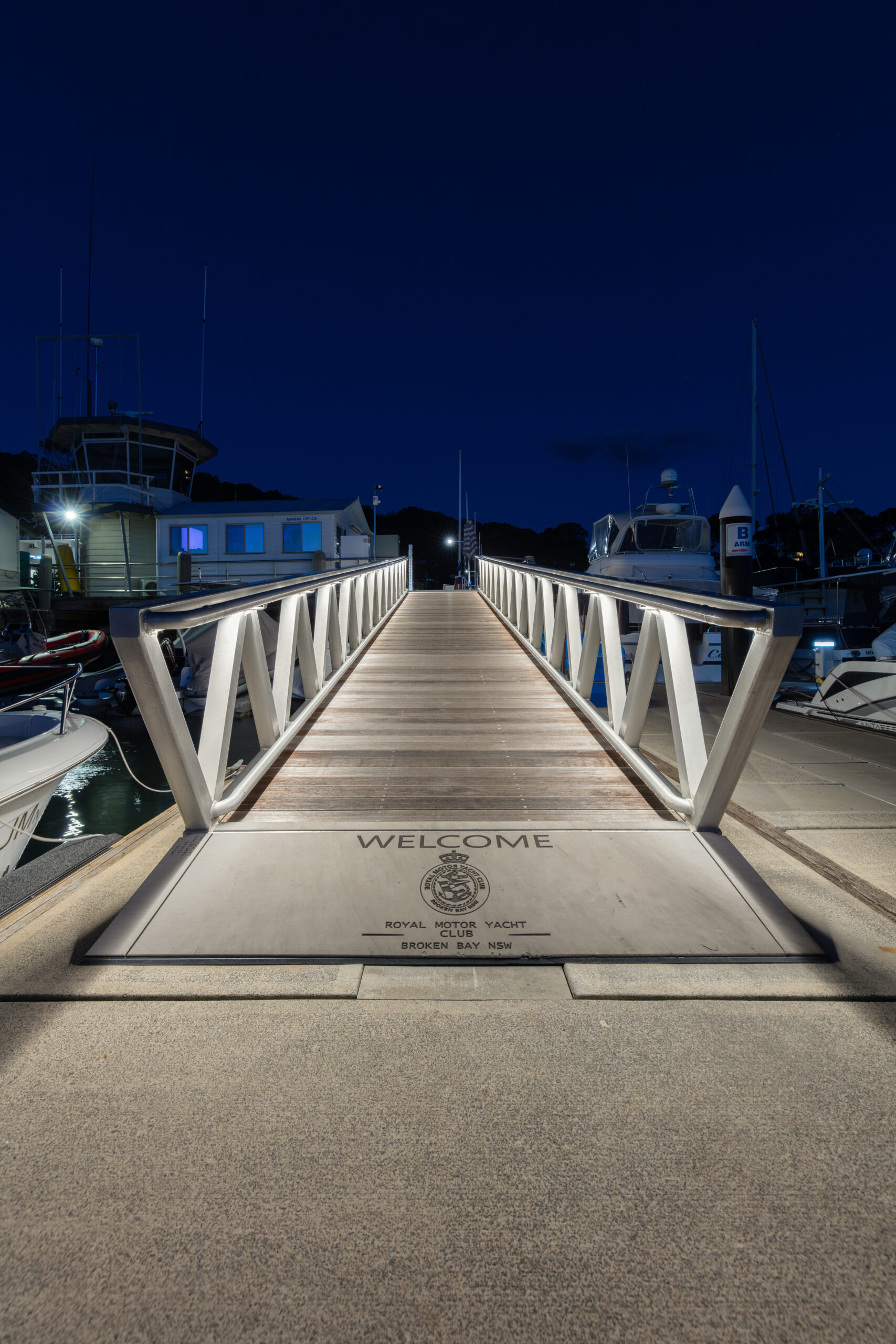
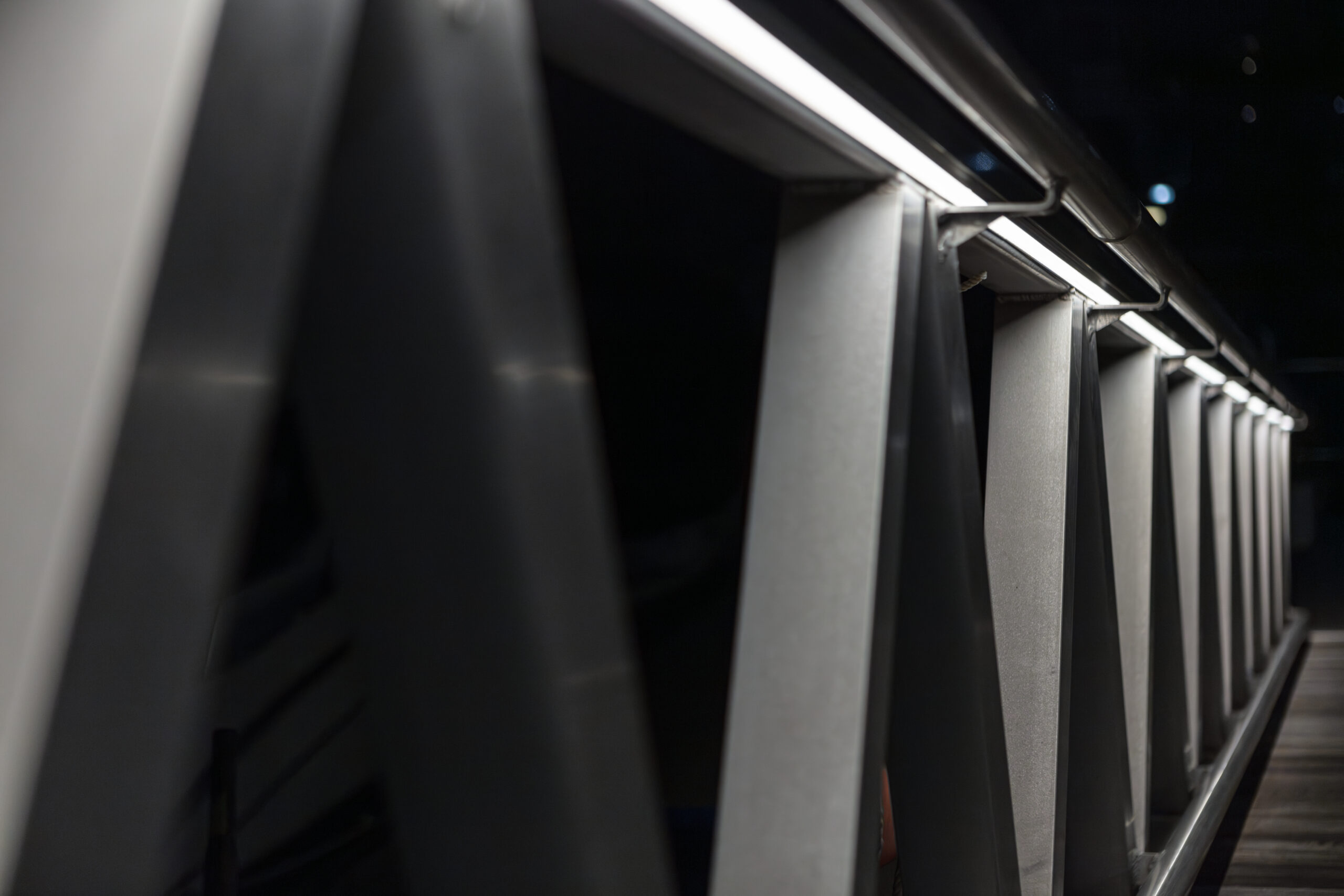
At the Royal Motor Yacht Club, LED strip lighting has been integrated along both sides of a marina gangway to create a continuous line of illumination after dark. Positioned beneath the handrails, the lighting highlights the aluminium structure while casting useful light across the timber walkway below.
The installation demonstrates how LED strip can combine functional illumination with architectural design. Rather than relying solely on conventional light fittings, the linear lighting works with the existing structure of the dock to create a clean, integrated result.

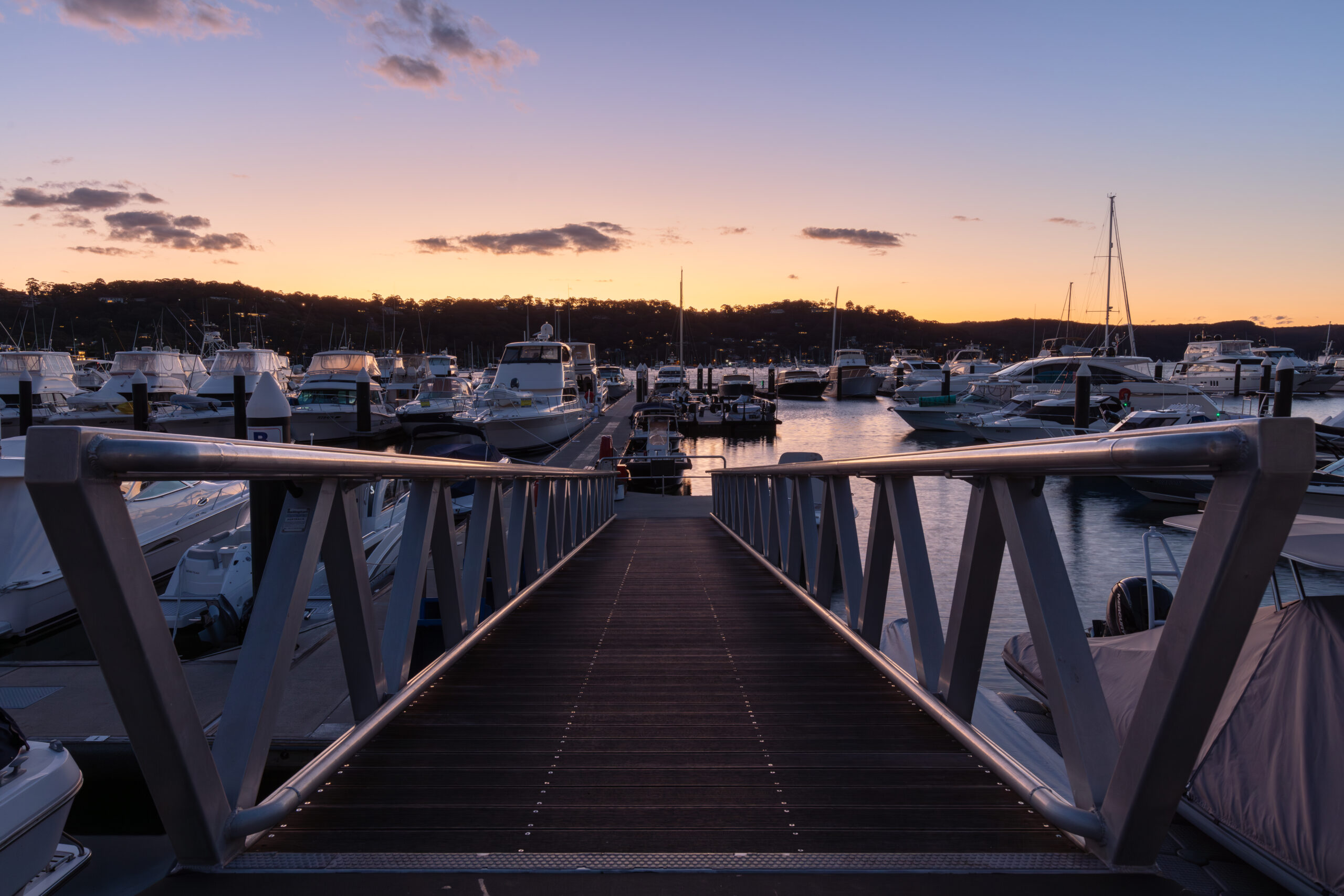
Lighting a marina walkway presents unique challenges after dark. Walkways, handrails, changes in level and the edges of the dock all need to remain clearly visible, while excessive illumination can detract from the atmosphere of the surrounding marina.
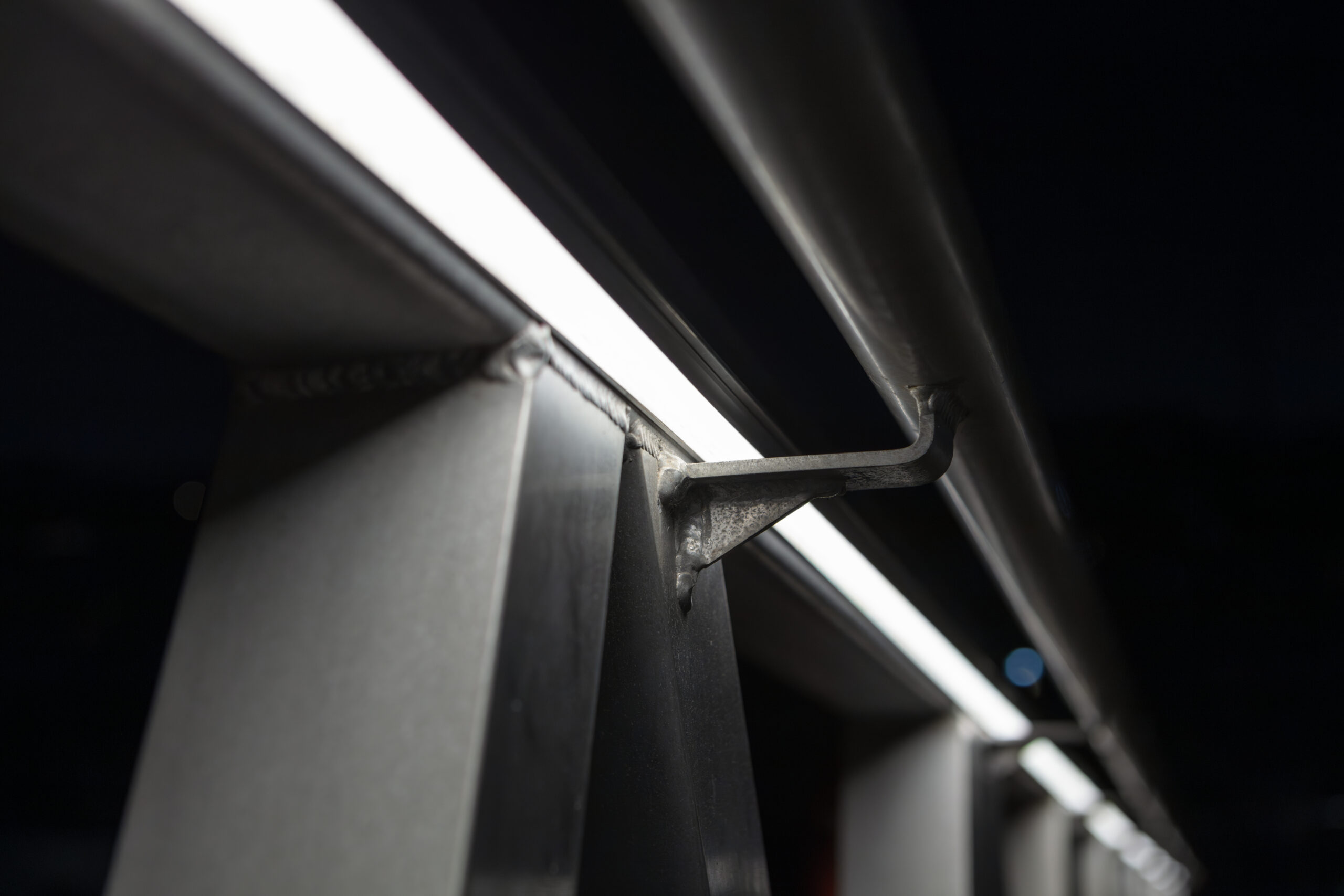
In this application, LED strip lighting has been positioned beneath the upper handrails on both sides of the gangway. This allows light to wash down across the aluminium framework and onto the timber surface, helping to visually define the walkway while keeping the light source itself relatively discreet.
The continuous nature of linear lighting also suits the geometry of the dock. Instead of creating isolated pools of light from individual fittings, the illumination follows the length of the gangway and becomes integrated into the structure itself. During daylight hours the installation remains understated, while after sunset it becomes a defining feature of the dock.
Practical lighting doesn’t need to be purely functional. A considered lighting design can improve how a space is used while also changing how it looks and feels.
At the Royal Motor Yacht Club, LED strip achieves this balance by providing useful illumination across the walkway while accentuating the dock’s architecture. Light catches the repeating aluminium supports beneath the handrails, creating a distinctive pattern along both sides of the gangway, while illumination across the timber decking provides contrast against the darker water and surrounding marina.
The effect becomes increasingly prominent as natural light fades. At night, two continuous lines of light emphasise the length and perspective of the walkway, giving the dock a distinctive visual identity without requiring the entire surrounding environment to be flooded with light.
Importantly, the light source itself isn’t necessarily the first thing you notice. Instead, you see its effect: an illuminated walkway, highlighted architectural details and a clearly defined route through the marina. This is where integrated linear lighting can excel—the fixture remains visually understated while the light becomes part of the architecture.
Outdoor and waterside locations introduce considerations that aren’t present in typical indoor applications. Exposure to moisture and changing environmental conditions means the lighting system, accessories and installation method need to be selected appropriately for the location.
When specifying outdoor LED strip, factors such as ingress protection, mounting method, electrical requirements, compatible profiles and drivers should be considered alongside the desired lighting effect. The suitability of the complete installation—not simply the light source—is particularly important in exposed environments.
Positioning also plays an important role in marina and dock lighting. Integrating illumination into handrails and structural elements can direct light towards the areas where it is most useful while reducing the need for visually dominant freestanding or overhead fittings. The result can provide practical illumination while complementing the surrounding environment.

While the Royal Motor Yacht Club demonstrates its use in a marina environment, the same principles can be applied across a wide range of residential, commercial and architectural projects.
The compact dimensions and continuous output of LED strip lighting make it particularly suited to applications where light needs to follow an architectural element. Depending on the product and installation requirements, this can include handrails, pathways, stairs, outdoor entertaining areas, building façades, landscape features, joinery and other architectural details.
Linear lighting can also create effects that are difficult to achieve with individual luminaires. Long surfaces and structural elements can be illuminated continuously, helping to visually connect a space and guide the eye through an environment. Whether the objective is subtle accent lighting, practical pathway illumination or a prominent architectural feature, LED strip provides considerable flexibility over where and how light is introduced.
That’s one of the advantages of well-integrated linear lighting—the fixture can remain visually understated while the light it produces becomes part of the architecture.
From subtle architectural accents to functional linear illumination, DOMUS LED strip lighting provides flexible options for a wide variety of residential, commercial and architectural applications.
Explore the DOMUS LED strip range to discover solutions for your next lighting project.